Materiality Assessment

Assessment of Key Issues
- Identifying Key Issues
The Company identifies significant sustainability issues, covering economic, social and environmental issues, by considering both internal and external factors related to business operations, such as business strategy direction, risk management of the organization, related standards and requirements alongside risks and opportunities that impact business operations according to the UN SDGs and the GRI Standards, as well as considering the needs and expectations of the Company’s stakeholders.
- Prioritization of Key Issues
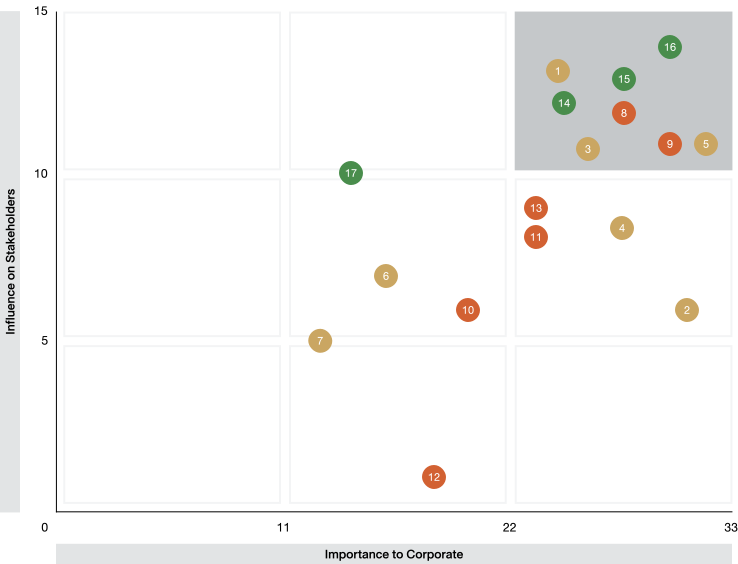
The Company considers the level of importance of the issues selected from relevant elements by categorizing key sustainability issues according to the following two factors:
- The impact level of each issue on the Company’s business operations in terms of good governance, economics, society, and the environment.
- The influence level of issues affecting stakeholders using information obtained from stakeholder engagement activities, and opinions obtained from various channels and questionnaires.
- Verification of Key Issues
Prepare a summary of key sustainability issues and review the consistency of the assessment results with the Company’s goals and strategies, as well as consistency with key issues under the GRI Standards (Core Option) section for accuracy and completeness and propose to the Sustainable Development Committee for consideration and approval of disclosure of information in various dimensions in the Company’s Sustainable Development Report.
The Result of Assessment of Key Sustainable Development Issues
The Result of Assessment of Key Sustainable Development Issues
-
1Economic Competitiveness
-
3ESG Risk Management
-
5Living Design Innovation
-
8Local Communities
-
9Human Capital Management
-
14Waste, Water, Air Pollution
-
15Green House Gas Management
-
16Reduce Environment Impacts